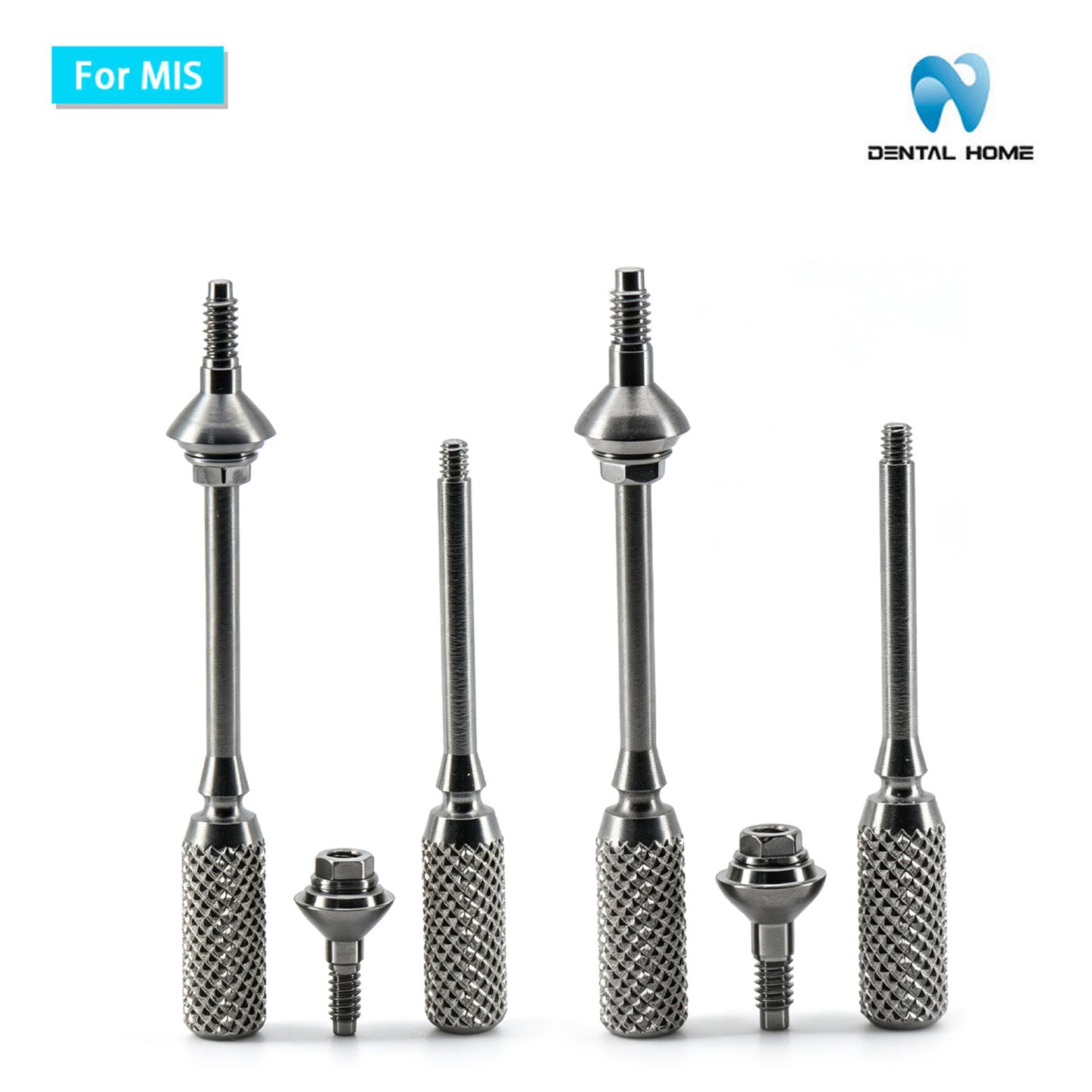

What Is an Angulated Screw Channel Abutment? A Complete Guide to ASC Restorations
Modern implant dentistry continues to evolve with technologies that improve both clinical outcomes and restorative flexibility. One of the most significant innovations is the Angulated Screw Channel (ASC) Abutment, which allows clinicians to redirect the screw access channel without compromising the fit of the restoration.
ASC abutments make it possible to place screw-retained restorations in cases where implant angulation would otherwise result in an unfavorable screw access position. This improves esthetics, preserves function, and expands treatment options for complex implant cases.
What Is an Angulated Screw Channel Abutment?
An Angulated Screw Channel (ASC) Abutment is a prosthetic component that allows the screw access channel of an implant restoration to be angled—typically by up to 25° or 30°, depending on the implant system and restorative design.
By redirecting the screw channel, clinicians can position the access opening in a more favorable location, such as the lingual surface of anterior restorations or the central fossa of posterior crowns.
This technology combines the retrievability of screw-retained restorations with improved esthetic outcomes.
Why Use an ASC Abutment?
Implants cannot always be placed in an ideal restorative position due to anatomical limitations, available bone volume, or surgical considerations.
An ASC abutment helps clinicians:
-
Redirect the screw access channel to a more favorable location
-
Improve esthetics by eliminating visible facial screw access holes
-
Maintain the advantages of screw-retained restorations
-
Simplify restoration retrieval for maintenance
-
Reduce the need for cement-retained restorations
-
Increase restorative flexibility in challenging implant cases
These benefits make ASC abutments a preferred solution for many anterior and posterior implant restorations.
Common Clinical Applications
Angulated Screw Channel Abutments are widely used in:
-
Anterior implant restorations
-
Esthetic zone cases
-
Posterior crowns with compromised implant angulation
-
Full-arch implant restorations
-
Digital CAD/CAM prosthetics
-
Immediate implant restorations
-
Multi-unit implant cases
They are particularly valuable when implant placement is limited by anatomical structures or existing bone conditions.
ASC Abutment vs Standard Screw-Retained Abutment
Although both support screw-retained restorations, they differ in flexibility.
| Standard Screw-Retained Abutment | Angulated Screw Channel Abutment |
|---|---|
| Straight screw access channel | Adjustable screw access angle |
| Limited by implant angulation | Greater restorative flexibility |
| Screw access may emerge facially | Screw access can often be repositioned lingually or occlusally |
| Best for ideal implant placement | Ideal for challenging implant positions |
ASC technology allows clinicians to preserve the advantages of screw-retained restorations while overcoming unfavorable implant angulation.
Choosing a High-Quality ASC Abutment
Precision engineering is essential for the success of angulated screw channel restorations.
When selecting an ASC abutment, clinicians should consider:
-
Accurate implant connection
-
High-strength titanium construction
-
Excellent machining precision
-
Reliable screw engagement at angled positions
-
CAD/CAM compatibility
-
Stable torque performance
-
Compatibility with the implant system
A well-manufactured ASC abutment contributes to accurate restoration fit and long-term clinical reliability.
Compatible ASC Abutments for Major Implant Systems
Compatible Angulated Screw Channel Abutments are available for many leading implant systems, including:
-
Straumann®
-
Nobel Biocare®
-
Zimmer Biomet®
-
Dentsply Sirona®
-
Osstem®
-
Hiossen®
-
Dentium®
-
Megagen®
-
BioHorizons®
Before selecting an ASC abutment, clinicians should verify the implant platform, connection type, restorative interface, and the maximum allowable screw channel angulation specified for the system.
Final Thoughts
Angulated Screw Channel Abutments have become an important advancement in modern implant prosthetics. By allowing clinicians to redirect the screw access channel, they improve esthetics, simplify restorative procedures, and maintain the retrievability of screw-retained restorations.
Choosing precision-engineered, compatible ASC abutments helps clinicians achieve predictable restorative outcomes while expanding treatment options for complex implant cases.