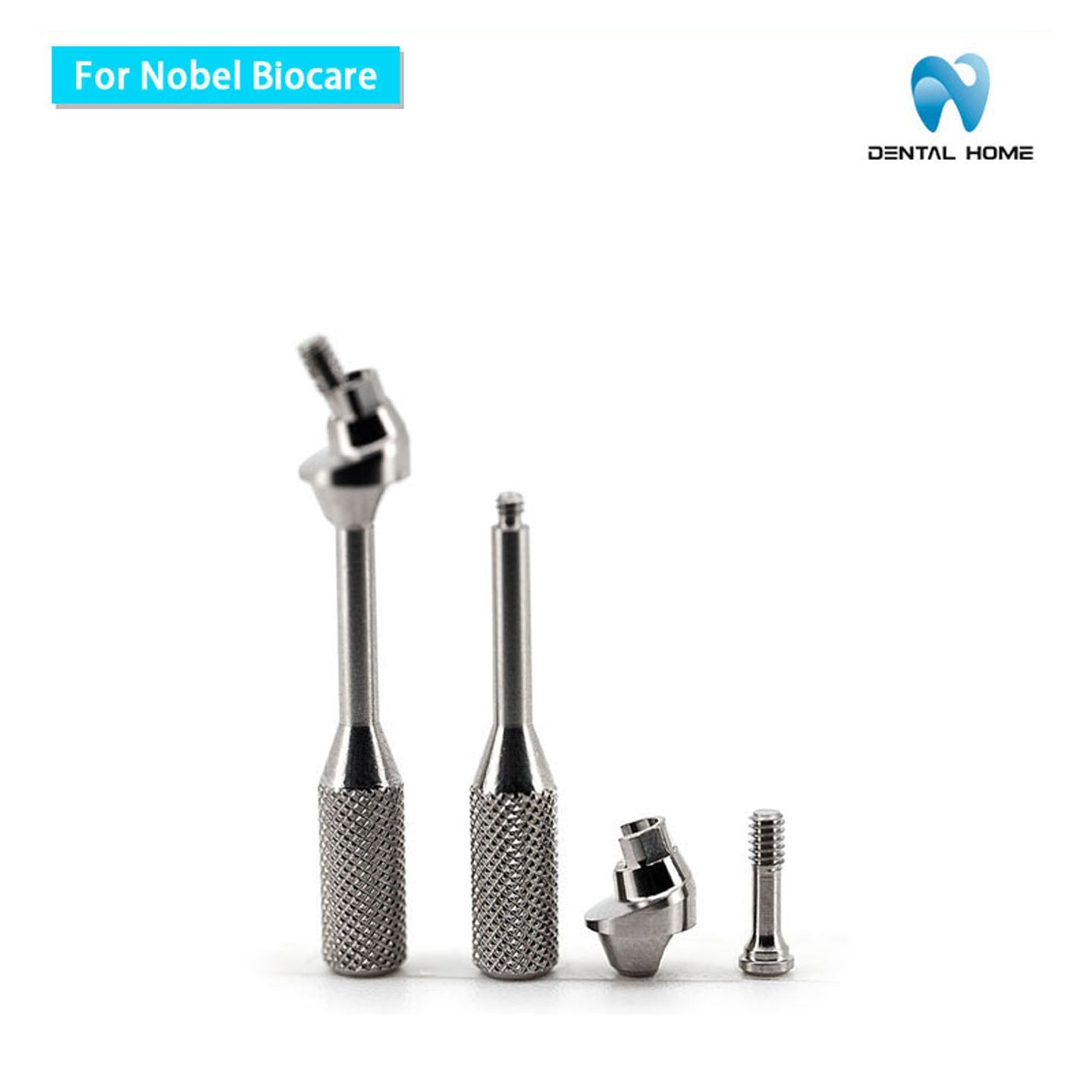

What Is a Temporary Abutment? A Complete Guide to Provisional Implant Restorations
A successful dental implant restoration involves more than placing an implant and attaching a final crown. Temporary restorations play an important role in protecting the implant, shaping the surrounding soft tissue, and improving patient comfort throughout the treatment process.
At the center of this provisional phase is the temporary abutment—a key component that supports temporary restorations while preparing the implant site for the definitive prosthesis.
What Is a Temporary Abutment?
A temporary abutment is a prosthetic component designed to support a provisional crown or bridge during the healing and restorative phases of dental implant treatment.
Unlike a permanent abutment, which is intended for long-term use, a temporary abutment is used for a limited period while the implant integrates with the surrounding bone and the soft tissue develops its final contour.
Temporary abutments help clinicians evaluate function, esthetics, and tissue response before placing the definitive restoration.
Why Is a Temporary Abutment Important?
Temporary abutments provide several clinical and aesthetic advantages throughout implant treatment.
Key benefits include:
-
Supporting provisional crowns or bridges
-
Guiding soft tissue healing and emergence profile development
-
Protecting the implant connection
-
Improving patient comfort and appearance during treatment
-
Allowing clinicians to evaluate occlusion and esthetics before final restoration
Proper use of a temporary abutment can simplify the restorative process and contribute to predictable long-term results.
Common Applications
Temporary abutments are commonly used in a variety of implant procedures, including:
-
Immediate implant restorations
-
Immediate loading protocols
-
Single-tooth implant cases
-
Anterior aesthetic restorations
-
Full-arch provisional prostheses
-
Customized soft tissue conditioning
They are particularly valuable in cases where achieving an ideal gingival contour is critical for the final esthetic outcome.
Types of Temporary Abutments
Temporary abutments are available in different designs to meet various clinical requirements.
Common options include:
-
Titanium temporary abutments
-
PEEK temporary abutments
-
Engaging temporary abutments
-
Non-engaging temporary abutments
-
Straight temporary abutments
-
CAD/CAM-compatible temporary abutments
The appropriate choice depends on the implant system, restoration type, and treatment plan.
Choosing a High-Quality Temporary Abutment
Precision and compatibility are essential for provisional restorations.
When selecting a temporary abutment, clinicians should consider:
-
Accurate implant connection
-
High-quality titanium or PEEK materials
-
Excellent machining precision
-
Compatibility with the implant platform
-
Reliable screw retention
-
Support for digital and conventional workflows
A precisely manufactured temporary abutment helps reduce chairside adjustments and improves restorative efficiency.
Compatible Temporary Abutments for Major Implant Systems
Many manufacturers produce compatible temporary abutments for leading implant systems, including:
-
Straumann®
-
Nobel Biocare®
-
Zimmer Biomet®
-
Dentsply Sirona®
-
Osstem®
-
Hiossen®
-
Dentium®
-
Megagen®
-
BioHorizons®
Compatibility should always be confirmed according to the implant platform, connection type, and restorative protocol.
Final Thoughts
Temporary abutments are an essential part of modern implant dentistry. They provide a stable foundation for provisional restorations, support soft tissue management, and allow clinicians to optimize function and esthetics before delivering the final prosthesis.
By selecting precision-engineered, high-quality temporary abutments, dental professionals can improve workflow efficiency, minimize adjustments, and achieve predictable restorative outcomes for implant-supported restorations.