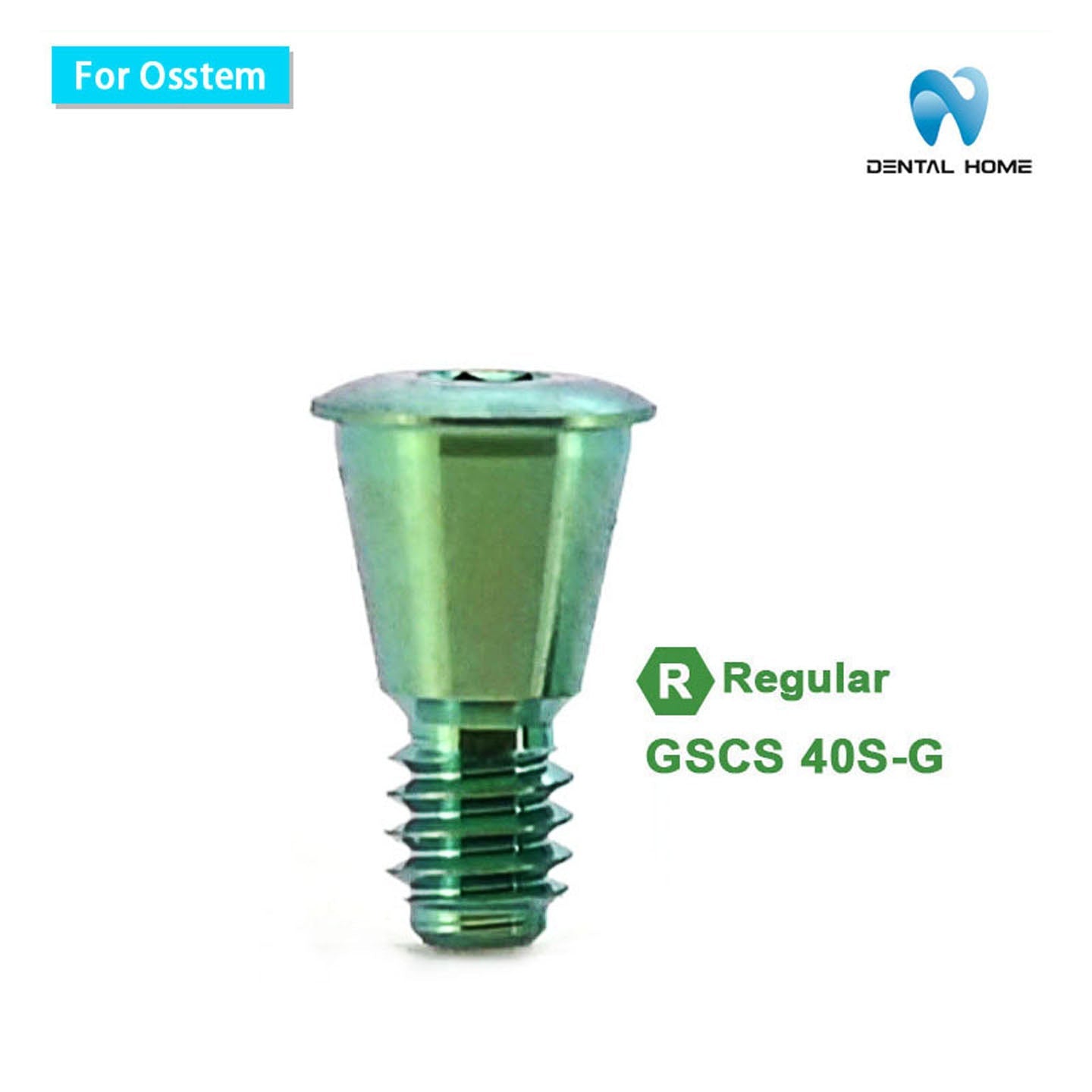

What Is a Lab Analog? A Complete Guide to Dental Implant Laboratory Analogs
In implant dentistry, achieving an accurate final restoration depends not only on precise clinical procedures but also on the quality of laboratory components. One of the most important yet often overlooked components is the lab analog.
A lab analog, also known as an implant analog, replicates the position and connection of a dental implant within a working model or digital workflow. It allows dental technicians to fabricate implant-supported restorations with accuracy and consistency.
What Is a Lab Analog?
A lab analog is a precision-machined component that reproduces the geometry and connection of a dental implant outside the patient's mouth.
It is inserted into a stone model or 3D-printed model after an implant impression or digital scan has been completed. The analog provides a stable replica of the implant platform, enabling technicians to design and manufacture abutments, crowns, bridges, and other implant-supported restorations.
Because the lab analog mirrors the implant connection, it is essential for ensuring a precise fit between the restoration and the implant.
Why Is a Lab Analog Important?
Accuracy is critical in implant prosthetics. Even small discrepancies can affect the fit and long-term success of a restoration.
A high-quality lab analog helps to:
-
Reproduce the exact implant position in the working model
-
Ensure accurate prosthetic fabrication
-
Support passive fit of implant restorations
-
Improve communication between the clinic and the dental laboratory
-
Reduce the need for chairside adjustments
Reliable analogs contribute to efficient workflows and predictable restorative outcomes.
Types of Lab Analogs
Different workflows require different types of lab analogs.
Common options include:
-
Conventional analogs for stone models
-
Digital analogs for 3D-printed models
-
Internal connection analogs
-
External hex analogs
-
Platform-specific analogs
-
Compatible analogs for major implant systems
The appropriate analog should always match the implant platform and connection design used in the clinical case.
Applications of Lab Analogs
Lab analogs are widely used in implant restorative procedures, including:
-
Single implant crowns
-
Multi-unit restorations
-
Implant-supported bridges
-
Full-arch restorations
-
Custom abutment fabrication
-
CAD/CAM workflows
-
Digital implant prosthetics
Whether using traditional impressions or intraoral scanning, the lab analog serves as the foundation for an accurate working model.
Choosing a High-Quality Lab Analog
When selecting a lab analog, dental laboratories and clinicians should consider several key factors:
-
Precision-machined implant connection
-
Excellent dimensional accuracy
-
Medical-grade materials
-
Secure fit within stone or printed models
-
Compatibility with the implant system
-
Consistent manufacturing quality
Precision is essential, as even minimal deviations may affect the fit of the final restoration.
Compatible Lab Analogs for Major Implant Systems
Many manufacturers provide compatible lab analogs for leading implant systems, including:
-
Straumann®
-
Nobel Biocare®
-
Zimmer Biomet®
-
Dentsply Sirona®
-
Osstem®
-
Hiossen®
-
Dentium®
-
Megagen®
-
BioHorizons®
Before use, always verify compatibility based on the implant platform, diameter, and connection type.
Final Thoughts
A lab analog is a fundamental component in implant prosthetics, providing an accurate replica of the implant within the laboratory environment. It supports precise model fabrication, efficient laboratory workflows, and reliable restorative outcomes.
By choosing precision-engineered, high-quality lab analogs, dental laboratories and clinicians can improve restoration accuracy, minimize adjustments, and achieve predictable long-term results for implant-supported restorations.