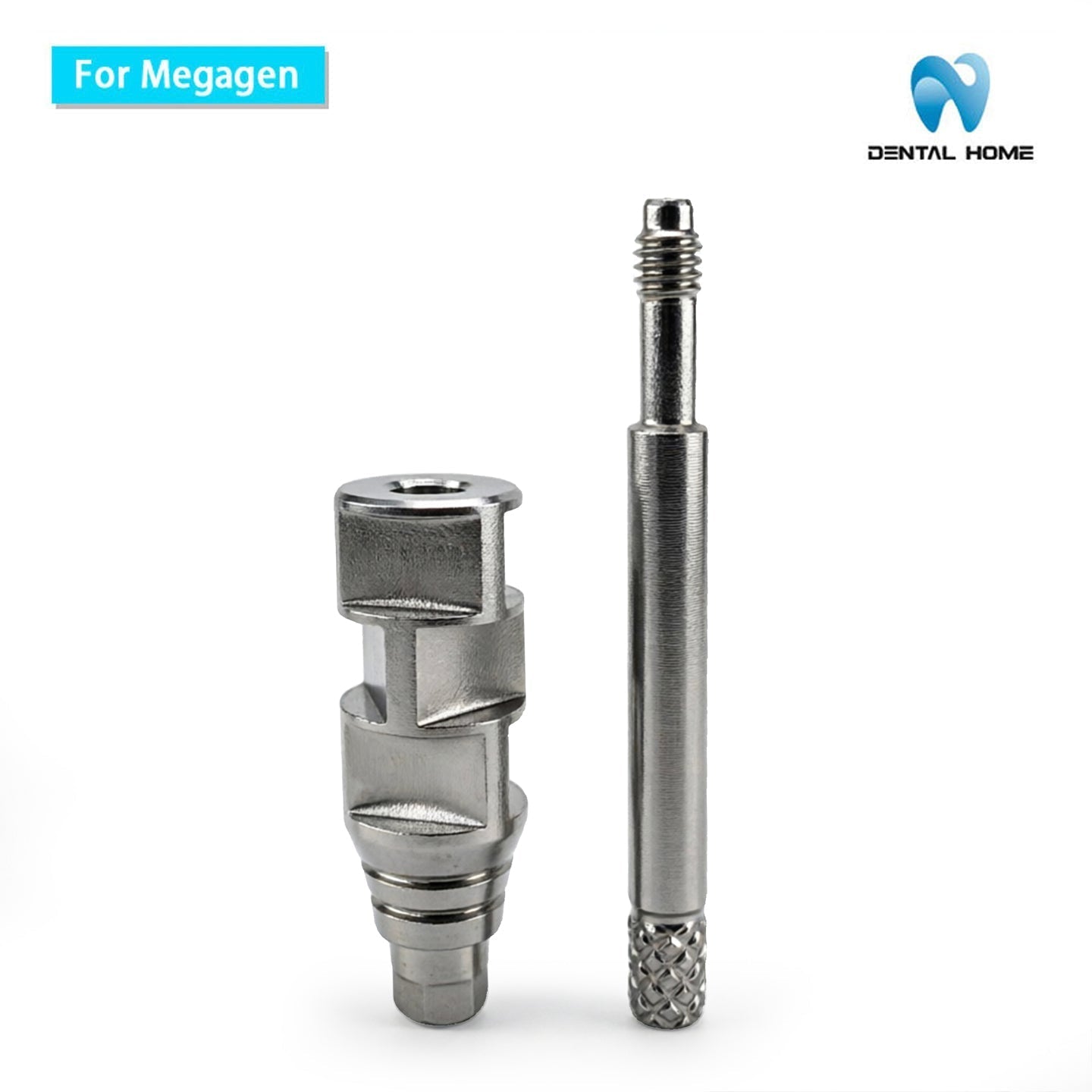
Dental Implant Straight Abutment: A Complete Guide to Features, Benefits, and Clinical Applications
Dental implant restorations rely on precision-engineered components to achieve long-term clinical success. Among these components, the Dental Implant Straight Abutment is one of the most widely used restorative solutions. Designed for implants placed in an ideal position, it provides a direct and stable connection between the implant fixture and the final prosthesis.
Whether restoring a single missing tooth or supporting a full-arch restoration, a high-quality straight abutment helps ensure predictable function, excellent esthetics, and long-term reliability.
What Is a Dental Implant Straight Abutment?
A Dental Implant Straight Abutment is a prosthetic component that connects a dental implant to a crown, bridge, or full-arch prosthesis. It features a 0-degree axis, making it the preferred choice when the implant has been placed in proper alignment with the planned restoration.
Straight abutments are available in a variety of collar heights, platform diameters, and connection types to accommodate different implant systems and clinical requirements.
Manufactured from medical-grade titanium, they offer outstanding strength, corrosion resistance, and biocompatibility.
Why Choose a Straight Abutment?
When implant positioning is ideal, a straight abutment offers several important clinical advantages.
Key benefits include:
-
Accurate prosthetic positioning
-
Excellent mechanical stability
-
Direct force transmission along the implant axis
-
Reduced restorative complexity
-
Reliable screw retention
-
Long-term durability
-
Compatibility with digital and conventional workflows
These advantages make straight abutments one of the most commonly selected components for implant restorations.
Clinical Applications
Dental Implant Straight Abutments are commonly used in:
-
Single implant crowns
-
Posterior restorations
-
Implant-supported bridges
-
Full-arch prostheses
-
CAD/CAM restorations
-
Screw-retained restorations
-
Cement-retained restorations
Because they require no angle correction, they are best suited for implants placed in an ideal prosthetic position.
Straight Abutment vs Angled Abutment
Selecting the appropriate abutment depends primarily on implant angulation.
| Straight Abutment | Angled Abutment |
|---|---|
| 0° restorative axis | Angled restorative axis (15°, 17°, 25°, etc.) |
| Best for ideal implant positioning | Corrects implant angulation |
| Simpler restorative workflow | Greater restorative flexibility |
| Excellent force distribution | Improved esthetics in challenging cases |
When implant placement is favorable, a straight abutment provides the simplest and most efficient restorative solution.
Materials Used in Straight Abutments
Most premium straight abutments are manufactured from Grade 5 Titanium Alloy (Ti-6Al-4V), which offers:
-
High mechanical strength
-
Excellent corrosion resistance
-
Outstanding biocompatibility
-
Precision machining
-
Long-term clinical performance
Titanium remains the industry standard for implant prosthetic components due to its proven reliability.
Choosing the Right Straight Abutment
When selecting a Dental Implant Straight Abutment, clinicians should evaluate:
-
Implant connection compatibility
-
Platform diameter
-
Collar height
-
Prosthetic design
-
Titanium quality
-
Precision machining
-
CAD/CAM compatibility
-
Manufacturer quality control
Choosing the correct abutment helps ensure an accurate fit and reduces the likelihood of restorative complications.
Compatible Straight Abutments for Major Implant Systems
Compatible straight abutments are available for many of the world's leading implant systems, including:
-
Straumann®
-
Nobel Biocare®
-
Osstem®
-
Hiossen®
-
Dentium®
-
Zimmer Biomet®
-
Dentsply Sirona®
-
Megagen®
-
BioHorizons®
Always confirm compatibility based on the implant connection, platform diameter, and restorative protocol before selecting an abutment.
Frequently Asked Questions
What is a straight abutment used for?
A straight abutment connects a dental implant to the final restoration when the implant is positioned in proper alignment. It provides a stable foundation for crowns, bridges, and full-arch prostheses.
What is the difference between a straight and an angled abutment?
A straight abutment has a 0° restorative axis and is intended for ideally positioned implants. An angled abutment compensates for implant angulation to improve prosthetic positioning and esthetics.
Are straight abutments made from titanium?
Yes. Most high-quality straight abutments are manufactured from medical-grade titanium alloy because of its strength, precision, corrosion resistance, and excellent biocompatibility.
Final Thoughts
The Dental Implant Straight Abutment remains one of the most reliable restorative components in implant dentistry. Its simple design, exceptional mechanical stability, and broad compatibility make it an ideal solution for implant restorations where implant placement is well aligned.
Precision-engineered straight abutments help clinicians and dental laboratories achieve accurate prosthetic fit, efficient workflows, and predictable long-term restorative outcomes.